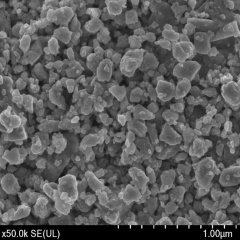
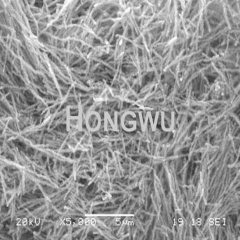
Nanomaterials have many surface, interface and small size effects, quantum size effects and macroscopic quantum tunneling effects that are different from the traditional bulk materials. They exhibit singular mechanical, electrical, magnetic, optical, thermal and chemical properties and become current physical , The forefront of chemistry and materials science hot spots in the materials, environment, energy, chemistry, biology and other fields show a wide range of applications. The use of nano-semiconductor photocatalytic degradation of pollutants in water has become a hot spot in the field of water treatment in recent years. Numerous studies have shown that many of the refractory organic matter in water can be efficiently degraded or removed by photocatalysis. Nanometer photocatalyst is the key factor in photocatalytic treatment of water pollution. N-type semiconductor materials such as nano-TiO, nano-ZnO is the most commonly used photocatalyst, in which TiO2 has shown many advantages, such as wide band gap, chemical stability, non-toxic, catalytic effect, low price and so on, Become one of the nano-catalysts with good application prospects.
1. Principle of photocatalytic degradation of pollutants in the water
Photocatalytic degradation of technology, usually based on TiO2 and other semiconductor materials as a catalyst. The energy band structure of these semiconductor particles is generally composed of an electron-filled valence band and an empty high-energy conduction band. There is a band gap between the valence band and the conduction band. When light is irradiated to the semiconductor with light having an energy equal to or greater than the forbidden band width, The valence band electrons (e-) are excited to transition to the conduction band to form photoelectrons (e-), which generate holes (h +) in the valence band and migrate to the particle surface under the action of electric field respectively. Photo-generated electrons (e-) are easily captured by oxidizing substances such as dissolved oxygen in water, while holes have a strong oxidizing power due to their strong ability to acquire electrons. The organic substances adsorbed on their surfaces, such as OH- and H2O The molecules are oxidized to · OH radicals, · OH radicals almost indiscriminately oxidation of organic matter in water.
2. Degradation of organic pollutants in wastewater
Study found that nano-titanium dioxide can effectively halogenated aliphatic hydrocarbons, halogenated aromatic hydrocarbons, organic acids, nitroaromatic, substituted aniline, polycyclic aromatic hydrocarbons, heterocyclic compounds, hydrocarbons, phenols Class, dyes, surfactants, pesticides and other photocatalytic reactions, the final generation of inorganic small molecules. So far it has been found that more than 3000 kinds of refractory organic compounds can be rapidly degraded by TiO2 under UV irradiation. Nano-titanium dioxide photocatalytic degradation of two methods, especially for those who use biological or general chemical methods are difficult to degradation of aromatics and aromatic compounds. For the organic pollutant system containing up to several thousand milligrams per liter of wastewater, photocatalytic degradation can effectively remove and remove the pollutants and meet the required environmental standards. Nanometer titanium dioxide in the degradation of organic water treatment has the following advantages: (1) has a large specific surface area, which has a more full contact with the organic matter in the wastewater, the maximum organic matter can be adsorbed on its surface; (2) has a stronger Of the UV absorption capacity, which has a stronger ability to photocatalytic degradation, can quickly break down the surface of organic matter. Photocatalytic oxidation of organic wastewater treatment equipment is simple, strong oxidizing power, with available sunlight, low energy consumption, no secondary pollution and other characteristics, it is in the depth of water treatment and industrial wastewater treatment of refractory organic matter Good application prospects, the main application areas are as follows:
2.1 organic phosphine pesticide wastewater treatment
2.2 Chlorinated organic waste water treatment
2.3 oily wastewater treatment
2.4 wool dyeing and finishing wastewater treatment
2.5 mine water treatment
3. Degradation of inorganic pollutants in wastewater TiO2 can effectively degrade organic compounds in wastewater into inorganic small molecules such as H2O, CO2, SO2-4, PO3-4, NO3- and halogen ions to achieve complete inorganicization.
3.1 chromium wastewater treatment
3.2 cyanide wastewater treatment
3.3 mercury-containing wastewater treatment
3.4 NO2 - wastewater treatment
3.5 leaded wastewater treatment
To sum up, the method of photocatalytic purification of nano-TiO2 is simple, completely decontaminated and does not produce secondary pollution. Almost all the organic substances listed in the list of priority pollutants can be decomposed by photocatalytic conversion. Therefore, photocatalytic oxidation shows great vitality in the field of wastewater treatment, and shows more attractive and practical prospect in the treatment of refractory organic wastewater.


 English
 français
 Deutsch
 русский
 italiano
 español
 português
 日本語
日本語 한국의
한국의 Türkçe





 8620-87226359,8620-87748917

