banner

Element/Metal/Alloy nanoparticles

Home More nanoparticles & nanomaterial Element/Metal/Alloy nanoparticles

Nanomaterials Promoting the development of energy vehicles, Will fuel cars go away from market?

Categories

New products

  • 99.99% beta sic nano powders

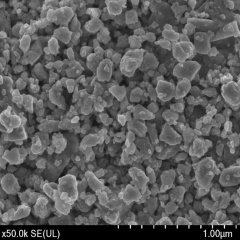
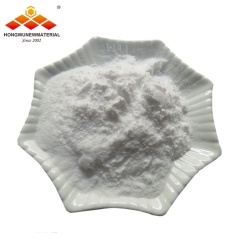
    99.99% high purity beta sic nano powders Our 4N nano β-SiC (99.99% purity) is precision-synthesized via CVD, delivering ultra-fine particle size with exceptional sintering activity for high-density ceramic components. It thrives in the most demanding semiconductor environments — from CMP chucks and lithography stages to plasma etch focus rings and chamber liners. Its chemical inertness and minimal metal impurity outgassing maximize chip yield where it matters most. Trusted by leading fabs and equipment makers worldwide. more

  • Transparent SiO₂ aqueous dispersion

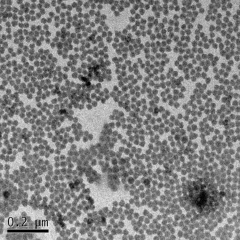
    Monodisperse spherical Nano SiO₂ aqueous dispersion/colloid This transparent SiO₂ aqueous dispersion is synthesized via patented sol-gel technology, featuring optical excellence visible light transmittance and shelf life >18 months under ambient storage. It is widely used in electronics as low-k dielectric materials, in biomedicine as drug carriers, and in optics for anti-reflection coatings. more

  • Nano Titanium Suboxide Ti₄O₇ Powder

    Magnéli Phase Nano Titanium suboxide Ti₄O₇ Powder Magnéli phase Nano titanium suboxide (Ti₄O₇) is an advanced functional material with a unique crystal structure, appearing as a blue-black powder with a precisely controlled particle size of 200–300 nm and a purity of up to 99.9%. As an important member of the titanium oxide family, Ti₄O₇ combines excellent electrical conductivity, chemical stability, and catalytic activity, making it an ideal choice for new energy, environmental protection, and electronics applications. more

  • Boron Nitride Nanotubes

    Boron Nitride Nanotubes(BNNTs): High Thermal Conductivity Heat Dissipation Fillers BNNTs share the tubular structure of carbon nanotubes but deliver fundamentally different properties: electrical insulation, superior thermal stability (up to 900°C in air), and high thermal conductivity. With a wide bandgap of ~5.5 eV, they offer consistent, predictable performance where CNTs fall short. more

  • Phase-Smart VO₂ Nanoparticles

    Phase-Smart VO₂ Nanoparticles: Intelligent Thermal Response, Engineered to Order From Thermochromic Color Change material to Intelligent Temperature Control material: The Performance Revolution and Application Blueprint of Vanadium Dioxide and Tungsten-Doped VO2 more

  • Precision Ceramic 3D Printing Solutions

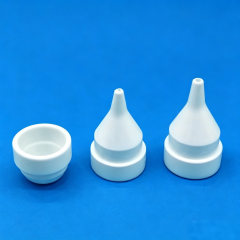
    Precision Ceramic 3D Printing Solutions​ turns impossible structures into reality Precision Ceramic 3D Printing Solutions – Redefining the boundaries of ceramic manufacturing, from dental restorations to aerospace-grade high-temperature components.Precision ceramic 3D printing turns impossible structures into reality. more

  • nickel nanowires NiNWs

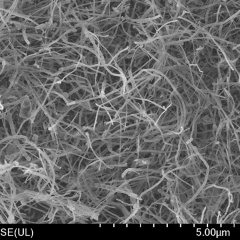
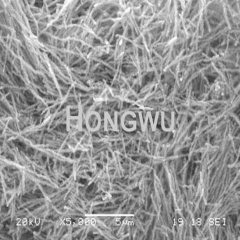
    New conductive material nickel nanowires NiNWs Hongwu Nickel nanowires have a wide range of potential applications in electronic materials, catalysis, polymers, magnetic storage ultra-high density recording materials, sensors and self-lubricating materials. more

  • Antibacterial Nano Silver Colloid

    Transparent Colloidal Ag Antibacterial Nano Silver Colloid Ag (Antibacterial Nano Silver Colloid) has been well known antibacterial, antiviral and antifungal properties are enhanced by small particle size and large surface area. more

  • Nano silica particles used in epoxy resin, superhydrophobic coating nano silica powder

    Nano silica particles used in epoxy resin, superhydrophobic coating nano silica powder Nano silica particles, 20-30nm, 99.8% purity, widely used in exposy resin and superhydrophobic coating. more

Latest news

Some nanomaterials for Thermochromic Application Some nanomaterials for Thermochromic Application

Thermochromism refers to the phenomenon where a material undergoes color changes under temperature changes. This change is usually caused by changes in the electronic or molecular structure of the material. Its application principle mainly involves t...

Nanomaterials Promoting the development of energy vehicles, Will fuel cars go away from market?

  • January 16,2019.
Under the guidance of policies, new energy vehicles have been showing a rapid development trend. Compared with traditional fuel vehicles, the biggest advantage of new energy vehicles is that they can minimize the environmental pollution caused by vehicle exhaust, which is in line with people's sustainable and recycling development philosophy.

Norway is set to ban the sale of fuel cars in 2025, India in 2030 and Britain and France in 2040!China will launch a pilot project in Hainan province on March 1,2019, aiming to popularize new energy vehicles in the province by 2030. This means that we can see the effect of banning the sale of fuel vehicles in six years at the earliest, and the replacement of fuel vehicles will definitely be new energy vehicles.


New energy generally refers to the renewable energy which is developed and utilized on the basis of new technology, including solar energy, biomass energy, water energy, wind energy, geothermal energy, wave energy, ocean current energy, tidal energy, hydrogen energy and so on.New energy vehicles include: hybrid electric vehicle (HEV), pure electric vehicle (BEV), fuel cell vehicle (FCEV), hydrogen engine vehicle, gas vehicle, alcohol ether vehicle, solar energy vehicle and other new energy vehicles.

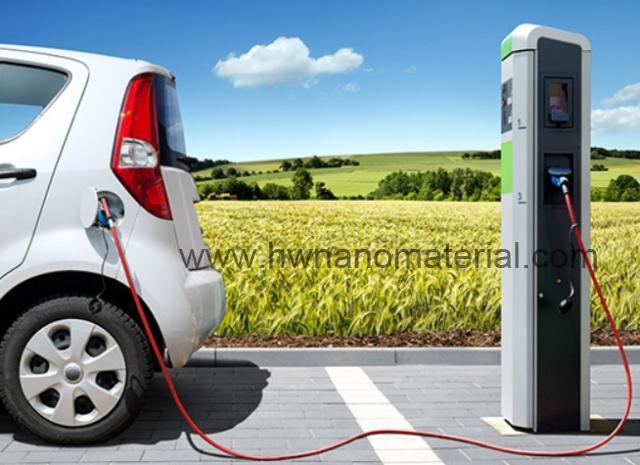
New energy vehicles do not burn oil, only electricity, Under the full point state the maximum mileage can reach about 450KM.But the key points are battery life problems, charging problems,etc.The other is to accelerate the construction of charging infrastructure, encourage wireless charging, intelligent charging andthe innovation and industrialization of high-power charging technologies, and support the construction and operation of hydrogen refueling stations.In the future, the charging trend of electric vehicles will be the combination of "daily slow charging of private ac charging piles" and "quick charging of public charging".

We are in an age of technology,as a key power battery industry, new energy automotive technology also started the development path in big strides, and nanotechnology as the leading technology in the new era, its application in the lithium battery cathode material will inevitably bring the industry a new round of technological breakthrough.

Focusing on the future, we will focus on breakthroughs in core technologies of key components such as power cells and fuel cells with high specific power and high durability.

With the rapid development of electric vehicle technology lithium ion battery performance is put forward higher request, which has inspired research  enthusiasm of lithium ion battery cathode materials with high capacity, long cycle life, compared with the current commercial carbon anode materials, Nano silicon and nano germanium electrode materials with higher specific capacity and energy density, therefore they is considered a potential next-generation lithium-ion battery cathode materials.

Silicon and germanium-based micro-nano structure and composite with carbon and other materials can improve the cycle life of silicon and germanium anode materials to a certain extent. In particular, silicon has been used as the cathode of lithium battery in commercial applications.As a germanium with better performance than silicon, it has the advantages of high reversible capacity and low voltage platform, and has higher electronic conductivity and lithium ion diffusion rate than silicon. Therefore, germanium is a strong candidate for the cathode material of high-power lithium ion battery.At present, researchers attempt to prepare various kinds of germanium nano-structured materials to improve their electrode properties.


HOWU Nanomaterials are supplying high quality battery cathode materials such as nano-silicon powder, nano-germanium powder, nano-carbon material and so on.

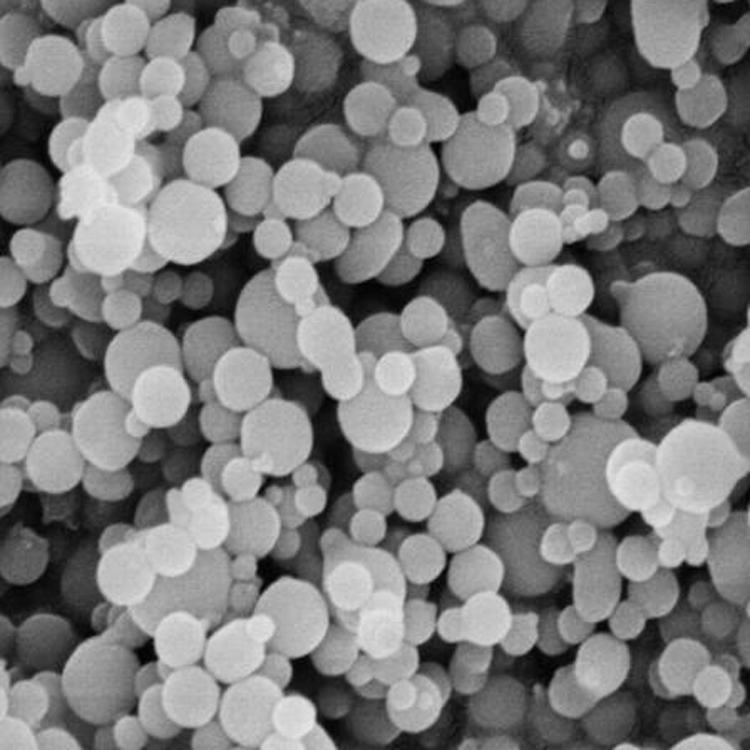
Silicon Nanoparticles, size 30-50nm, 99%, good spherical;100-200nm and larger sizes, 99.9%

Germanium Nanoparticles, size 30-50nm,100-200nm, 300-400nm, and larger sizes with high purity 99.999%


Looking forward to the future of new energy vehicles can develop faster and better.


Copyright © 2010-2026 Hongwu International Group Ltd All Rights Reserved.

The professional team to service !

Chat now

Live chat

    Email us with any questions or inquiries or use our contact data. We would be happy to answer your questions.