banner

More nanoparticles & nanomaterial

Home More nanoparticles & nanomaterial

Subverting existing cognitive nanotechnology

New products

  • 99.99% beta sic nano powders

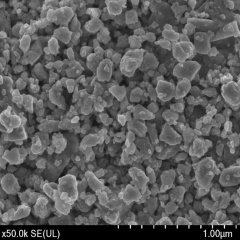
    99.99% high purity beta sic nano powders Our 4N nano β-SiC (99.99% purity) is precision-synthesized via CVD, delivering ultra-fine particle size with exceptional sintering activity for high-density ceramic components. It thrives in the most demanding semiconductor environments — from CMP chucks and lithography stages to plasma etch focus rings and chamber liners. Its chemical inertness and minimal metal impurity outgassing maximize chip yield where it matters most. Trusted by leading fabs and equipment makers worldwide. more

  • Transparent SiO₂ aqueous dispersion

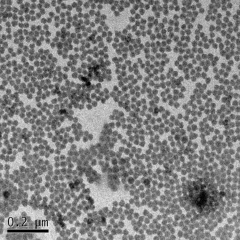
    Monodisperse spherical Nano SiO₂ aqueous dispersion/colloid This transparent SiO₂ aqueous dispersion is synthesized via patented sol-gel technology, featuring optical excellence visible light transmittance and shelf life >18 months under ambient storage. It is widely used in electronics as low-k dielectric materials, in biomedicine as drug carriers, and in optics for anti-reflection coatings. more

  • Nano Titanium Suboxide Ti₄O₇ Powder

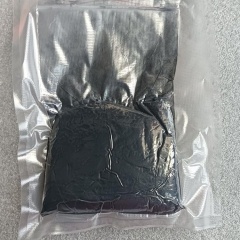
    Magnéli Phase Nano Titanium suboxide Ti₄O₇ Powder Magnéli phase Nano titanium suboxide (Ti₄O₇) is an advanced functional material with a unique crystal structure, appearing as a blue-black powder with a precisely controlled particle size of 200–300 nm and a purity of up to 99.9%. As an important member of the titanium oxide family, Ti₄O₇ combines excellent electrical conductivity, chemical stability, and catalytic activity, making it an ideal choice for new energy, environmental protection, and electronics applications. more

  • Boron Nitride Nanotubes

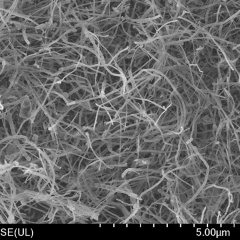
    Boron Nitride Nanotubes(BNNTs): High Thermal Conductivity Heat Dissipation Fillers BNNTs share the tubular structure of carbon nanotubes but deliver fundamentally different properties: electrical insulation, superior thermal stability (up to 900°C in air), and high thermal conductivity. With a wide bandgap of ~5.5 eV, they offer consistent, predictable performance where CNTs fall short. more

  • Phase-Smart VO₂ Nanoparticles

    Phase-Smart VO₂ Nanoparticles: Intelligent Thermal Response, Engineered to Order From Thermochromic Color Change material to Intelligent Temperature Control material: The Performance Revolution and Application Blueprint of Vanadium Dioxide and Tungsten-Doped VO2 more

  • Precision Ceramic 3D Printing Solutions

    Precision Ceramic 3D Printing Solutions​ turns impossible structures into reality Precision Ceramic 3D Printing Solutions – Redefining the boundaries of ceramic manufacturing, from dental restorations to aerospace-grade high-temperature components.Precision ceramic 3D printing turns impossible structures into reality. more

  • nickel nanowires NiNWs

    New conductive material nickel nanowires NiNWs Hongwu Nickel nanowires have a wide range of potential applications in electronic materials, catalysis, polymers, magnetic storage ultra-high density recording materials, sensors and self-lubricating materials. more

  • Antibacterial Nano Silver Colloid

    Transparent Colloidal Ag Antibacterial Nano Silver Colloid Ag (Antibacterial Nano Silver Colloid) has been well known antibacterial, antiviral and antifungal properties are enhanced by small particle size and large surface area. more

  • Nano silica particles used in epoxy resin, superhydrophobic coating nano silica powder

    Nano silica particles used in epoxy resin, superhydrophobic coating nano silica powder Nano silica particles, 20-30nm, 99.8% purity, widely used in exposy resin and superhydrophobic coating. more

Latest news

Some nanomaterials for Thermochromic Application Some nanomaterials for Thermochromic Application

Thermochromism refers to the phenomenon where a material undergoes color changes under temperature changes. This change is usually caused by changes in the electronic or molecular structure of the material. Its application principle mainly involves t...

Subverting existing cognitive nanotechnology

  • November 5,2018.
Nanotechnology is a technology that explores and controls substances below 100 nanometers. At this scale, materials exhibit properties that are distinct from macroscopic and microscopic particles. After the rapid development of the last two or three decades, some nanomaterials with novel characteristics, such as graphene with conductivity similar to metallic copper, carbon nanotubes with tensile strength 100 times higher than that of the same volume of steel, can be controlled by changing the size. Quantum dots of the spectrum, metamaterials with stealth function, etc. are constantly being discovered, and have been widely used in the fields of medicine, energy, environment and information, and even military.

Wide application of nanotechnology

In the medical field, nanotechnology provides new ways and means for drug delivery and treatment of diseases. With the help of nano-carriers, the drug can overcome the biological barrier of the human body, and directly reach the lesion area through human manipulation, and the local drug concentration is enhanced to enhance the therapeutic effect while reducing the damage to other tissues, and the advantage is more obvious in cancer treatment. At present, some nano drugs for cancer have been put on the market.

In addition, the use of nanotechnology can achieve early diagnosis and monitoring of disease. Bio-barcodes prepared with gold nanoparticles can reduce the detection bottom line of disease biomarkers by 106 times, greatly improving the possibility of early detection of diseases; skin patches prepared with graphene have changed the traditional finger puncture to measure blood sugar. The method achieves monitoring and management of blood glucose in diabetic patients in a non-invasive manner. Nanotechnology has effectively promoted the solution of bottlenecks in the medical development process and has become an indispensable technology and weapon in the field of medical research.

In the energy field, nanotechnology has provided new ideas for the rapid development and application of green clean energy technologies, opening up new avenues. Nanotechnology brings new opportunities for the development of lithium batteries. Using nanotechnology, the safety of charging and discharging in the field of traditional lithium batteries (using silicon nanowires or S/nano-TiO2 with hollow shell structure) and slow speed (using carbon nanotubes, etc.), battery instability (using super Major problems such as thin two-dimensional BN/graphene composites, etc. have been properly solved.

At present, the research on nano-materials for lithium batteries has been perfected and industrialized. The energy density of commercial lithium batteries has reached 300Wh/kg, and the cruising range of lithium battery-powered vehicles can reach 470 kilometers. With the further development of nano-materials, The lithium battery performance is further optimized, and its energy density is expected to reach 500Wh/kg, achieving a battery life of 800 kilometers. Supercapacitors have become the "new darling" of new energy vehicles because of their fast charging speed and high power density.

Nanotechnology can help supercapacitors lose weight while further increasing the charging speed. Recently, a supercapacitor made of carbon nanotubes has been introduced. Its charging and discharging speed is 1000 times that of traditional batteries. It can complete car charging in just a few seconds, even three times faster than traditional car refueling, and the charging cycle can be as high as 1 million. Times. Some of the more superior, lighter, and more environmentally friendly novel supercapacitors using nanotechnology, such as eggshell membrane supercapacitors and sponge supercapacitors, continue to emerge. Once these supercapacitors are successfully commercialized, they will have a certain impact on the rare earth market and will also bring subversive changes to the traditional electric vehicle industry.

Nano-friction generators are new applications of nanotechnology in the field of mechanical energy generation. It can be used to collect mechanical energy that is not easily accessible by conventional generators, such as friction energy, wind energy, wave energy, and mechanical vibration. At present, some products using nano-friction generators have been introduced, such as self-powered smart shoes and friction electric air purifiers. As a new green energy supply technology, nano-friction generators will provide a new solution for the development of micro-energy supply in the Internet of Things, providing a new technology for large-scale “blue energy” (marine energy). The program has broad application prospects in the power supply of universalized portable electronic products. Nano-friction generators that utilize nanotechnology are likely to lead technological innovation and profoundly change human society.

It can be seen that nanotechnology not only changes the perspective of people's understanding of the world, but also focuses people's vision on the range below 100 nanometers, which has spawned new research fields and technologies (such as spintronics, nanoimprint lithography, etc.). It has also opened up new horizons for its application fields, providing an effective way for solving bottleneck problems, bringing new development opportunities to traditional industries, and at the same time its new products and new methods have formed a huge emerging market. Further development is very likely to trigger a production revolution and a consumer revolution.

Copyright © 2010-2026 Hongwu International Group Ltd All Rights Reserved.

The professional team to service !

Chat now

Live chat

    Email us with any questions or inquiries or use our contact data. We would be happy to answer your questions.